
I have used many Line6 amps including all the spider II-IV range, Bogner/Line6 Spidervalves and POD preamps/pedalboards.
The problem I always encountered is that the stock settings and memory banks are not always ear pleasing... The original noise gate, gain level, internal booster, EQ and effects settings are not usually set quite right so they need to be customised to the guitarist's taste.
"Easter Eggs":
The line6 spider amps have a few "hidden" features such as a built in switchable noise gate and clean booster. There are also quite a few other special features on each model. Therefore, one should really read the line6 manual before trying to find all the tone settings hidden inside the dsp chip of his/her amp.
The repair:
This particular line 6 spider II 30W amplifier came in with a broken cd/auxiliary input mini jack. The owner asked for a larger aux in jack so I wired a new stereo 6mm one and mounted it on the back of the amp. This input jack works like an fx loop Return jack so you can send any stompbox/preamp signal to its 30W power amp and 12" Celestion Rocket 50 speaker. By the way, line6 spiders use Celestion made 12" speaker models such as the Rocket 50, Seventy 80, Vintage 30 etc.
The easy mods:
The next step was to modify the spider preamp a bit. With all the smd components on the pcb and the digital circuit, there's not much you can easily modify on a line6 amplifier.
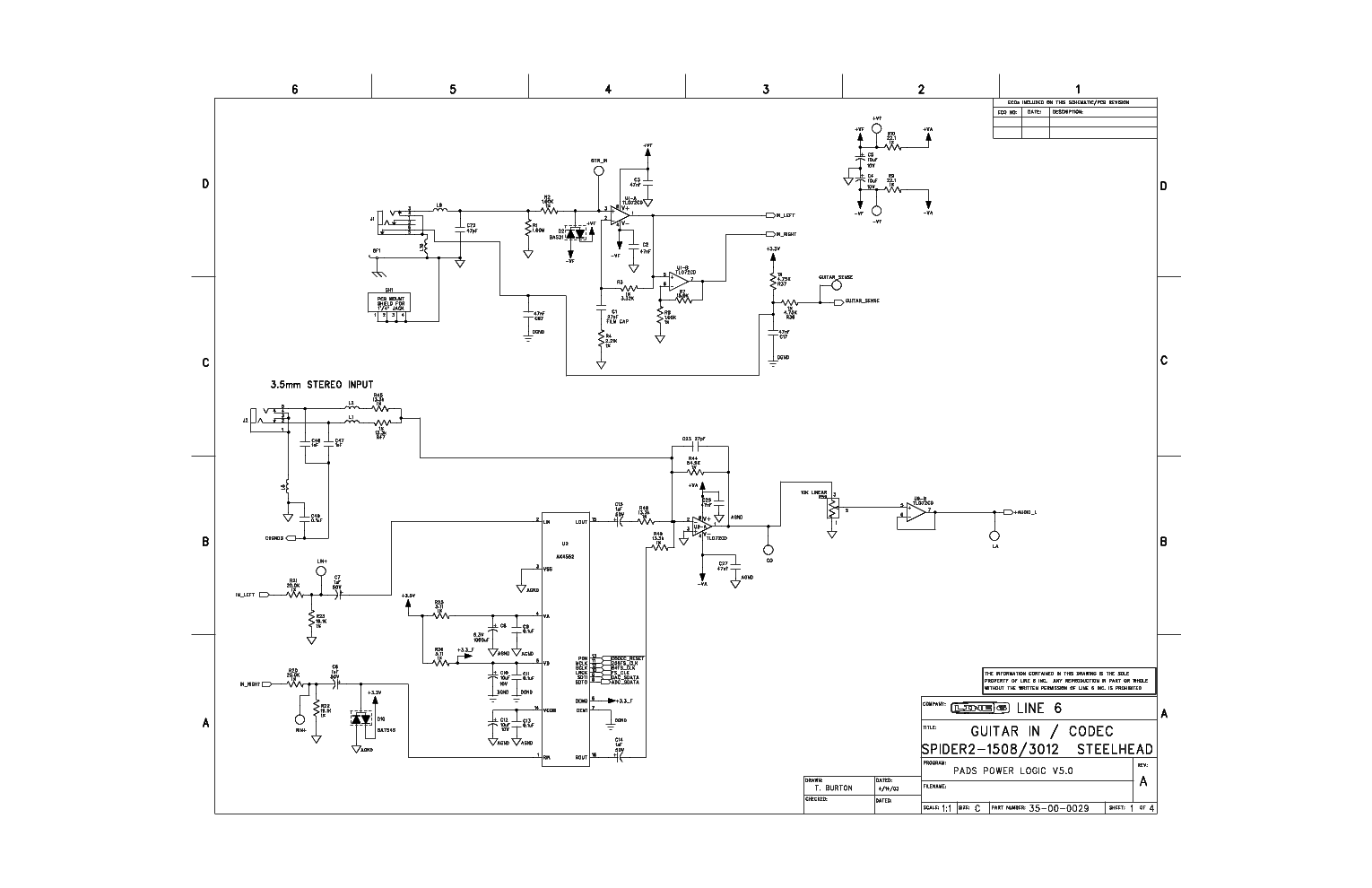
The only preamp part that could be easily replaced is the C1 27nF Film capacitor used on the input opamp circuit. You can see this capacitor on the pictures below. It's the only non-smd part close to the guitar input and it's part of a high pass filter. I usually lower the value of this capacitor to around 10nF to cut a bit of input bass frequencies that make the amp go a bit fuzzy. The tone is more open and there's better note definition once the lower guitar signal frequencies are reduced a little.
You can certainly try different C1 capacitor values from 1nF to 100nF and see the difference in tone. This high pass capacitor exists inside almost every spider series amplifier but it's not always labeled as "C1" and it's not always easily spotted...
Here is the line6 spider II input circuit schematic were the C1 can be found:
http://elektrotanya.com/line6_spider_15w_ii3012_1508_sm.pdf/download.html
http://elektrotanya.com/PREVIEWS/63463243/23432455/line-6/line6_spider_15w_ii3012_1508_sm.pdf_1.png
The Speaker:
The second "easy mod" one can do is to try a different 12" speaker on his/her spider amplifier!
The guitar speaker is the final stage of your amp and there are many guitar speakers on the market to suit any tone and style you're after. Just make sure the wattage rating of the speaker is higher than the amp's power (e.g. 30W in this case) and the impedance is the same as the old speaker (usually 4-16Ohms).
Here are a few pictures of the spider II 30 amp: (click to enlarge)


Cheers,
Thanos
U r great man !!! Keep on spirit..cheers..friendly greeting from Indonesia ;)
ΑπάντησηΔιαγραφήYou shouldnt use metal ground jacks this type of amp doesnt like that. Specially speaker out you want to use plastic cliff jacks only!
ΑπάντησηΔιαγραφή